CFBR Meaning: What Commenting for Better Reach Really Does
CFBR stands for “Commenting for Better Reach”: leaving a comment on a LinkedIn post purely so the algorithm shows that post, and your name, to more people, as LinkedHelper’s guide defines it. You will see it typed as a bare acronym under posts. Here is where it came from, whether it works, and what to write instead.
Key takeaways
- CFBR means Commenting for Better Reach, per LinkedHelper’s guide.
- The mechanic: the algorithm reads a comment as engagement, so the post travels further, per Awais Hainayat’s Medium essay.
- Comments earn more reach than likes or shares, per recruiter Jen Whitfield’s explainer.
- Sprinklr’s glossary notes CFBR is widely used on LinkedIn and Facebook.
- A bare “CFBR” comment helps the post; a real comment helps you both.
What does CFBR mean?
CFBR is shorthand for Commenting for Better Reach. As LinkedHelper’s guide puts it, it means leaving comments on posts just to make the post spread like wildfire. Buffer’s glossary describes the same move from the creator’s side: encouraging followers to leave comments to boost a post’s visibility.
The acronym does double duty. Sometimes the poster invites it (“drop a CFBR if this helped”), and sometimes a commenter volunteers it, typing the four letters as their whole contribution. Either way the goal is identical: trigger the engagement signal without necessarily adding anything to the conversation.
Sprinklr’s social media glossary notes CFBR is widely used among users on LinkedIn and Facebook, though LinkedIn is its natural habitat, where professional visibility has direct career and pipeline value.
Where did CFBR come from, and why comments?
It grew out of a simple observation about the feed. LinkedIn rewards posts that receive comments, and once visibility carries real stakes (jobs, clients, recognition), people invent shortcuts, as Awais Hainayat’s Medium essay on the economics of a LinkedIn comment traces. His summary of the mechanic: you comment, the algorithm reads it as engagement, the post travels a little further, and the author feels supported and may return the favor.
Why comments specifically, and not likes? Recruiter Jen Whitfield’s acronym explainer answers from practice: commenting tends to get better overall reach than liking or sharing, so a comment is the strongest one-click gift you can hand a poster. LinkedHelper adds the network detail: comments from people outside the author’s network make a post look organically interesting, prompting the feed to show it to the commenters’ own connections.
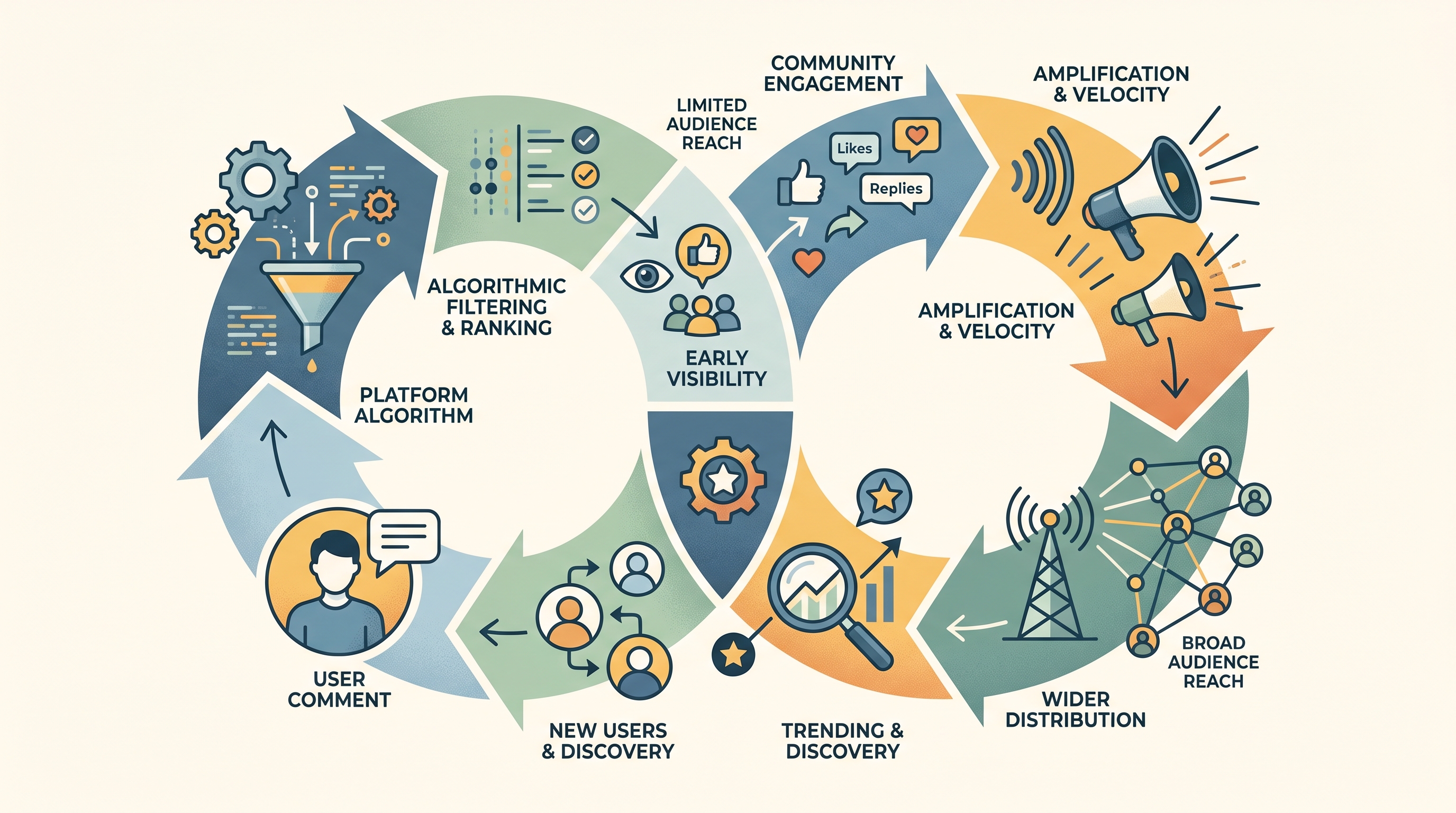
The result is a small favor economy. Hainayat quotes its plainest form: “Drop a CFBR,” someone writes, “and I’ll engage with your latest post too.” The acronym openly names what is happening, which is half admission and half strategy.
Does CFBR actually work?
Partially, and less than the ritual implies. The mechanism is real: comments are strong engagement signals, and a burst of them widens a post’s distribution, which is exactly the effect measured in our guide to what impressions mean on LinkedIn. A post that collects fifteen comments will, other things equal, cross more screens than one with two.
The catch is comment quality. LinkedHelper’s pros-and-cons breakdown notes the algorithm and human readers both discount hollow engagement: a wall of bare “CFBR” replies signals a pod, not a conversation, and the reach it buys decays with the post. Hainayat’s essay lands on the same nuance: the favor is real, the support is often sincere, and the value still depends on whether anyone said anything.
For the commenter, the math is better. Your comment rides on the post’s distribution, putting your name in front of the author’s audience. One thoughtful paragraph under a big post routinely earns more profile views than a mediocre post of your own.
There is also a timing dimension the ritual ignores. Early comments compound harder, because they catch the post while the feed is still deciding how far to push it; a CFBR dropped on day three lands after the distribution question is settled. If you are going to spend a comment strategically, spend it in the first hours, and spend it on posts whose audience overlaps the people you want reading your profile.
What should you write instead of CFBR?
A one-sentence real comment. Whitfield’s explainer is honest about why people type the acronym: “As I don’t have anything particularly interesting to say, I’ll just say #cfbr.” The fix is to find the one thing you do have:
- Add a data point: “We tried this across 40 client accounts; the reply-rate lift was real.”
- Extend the idea: “This also applies to follow-ups, not just first messages.”
- Ask the next question: “Does this hold for small networks too?”
- Tag a specific takeaway: “The third point is the one most teams skip.”
Each earns the same algorithmic credit as CFBR, per Whitfield’s comments-beat-likes observation, while also making a stranger want to click your name. The bare acronym helps the poster; a substantive sentence helps you both.
What does reach culture do to your inbox?
The same engagement game that spawned CFBR fills your DMs. Reach chasing trains thousands of professionals to broadcast at scale, and the outbound version of that mindset is the cold pitch wave hitting your inbox. LinkedIn has no spam filter, so the growth-at-all-costs machine dumps its output straight into your primary messages, as our guide to stopping LinkedIn spam breaks down.
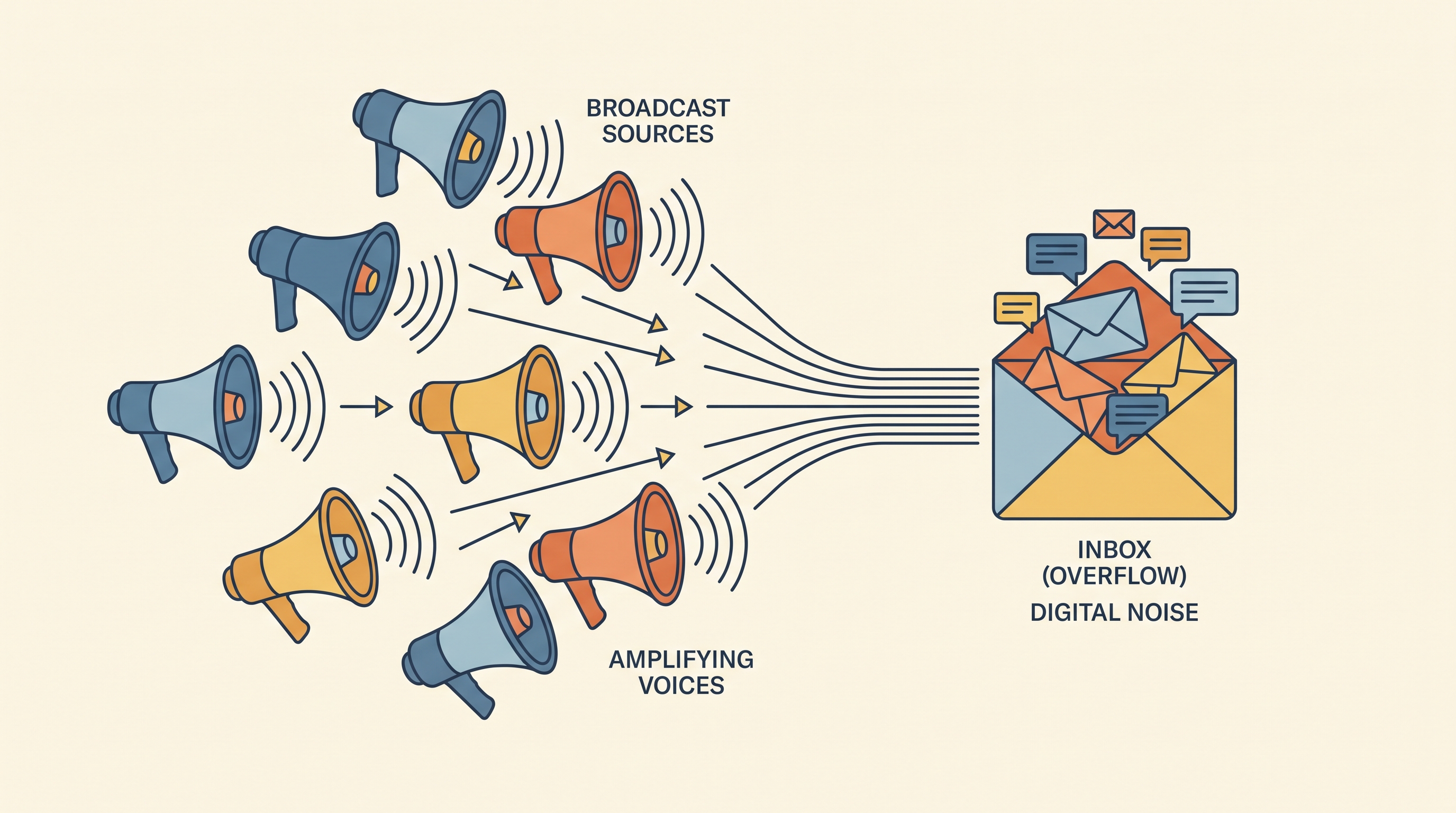
Visibility compounds the effect: the better your CFBR-boosted posts perform, the more strangers see your name and open your DMs. That receiving side is what Linbox exists for. It filters cold pitches and recruiter blasts out of your primary view automatically, moves them aside without deleting anything, and restores a sender the moment you reply. Play the reach game as hard as you like; the inbox it feeds stays sorted.
Frequently asked questions
What does CFBR stand for?
Commenting for Better Reach, per LinkedHelper’s guide. It labels a comment left primarily to boost a post’s distribution rather than to add to the discussion.
What does CFBR mean on LinkedIn?
On LinkedIn it marks the engagement-swap culture: users comment on each other’s posts so the algorithm shows those posts more widely. Buffer’s glossary frames it as creators encouraging followers to comment to boost visibility.
Does commenting for better reach actually work?
The mechanic works: comments are strong engagement signals, and Whitfield notes commenting tends to earn better reach than liking or sharing. But hollow “CFBR” walls are discounted by readers and buy only short-lived distribution, per LinkedHelper’s pros and cons.
Is CFBR bad etiquette?
It is tolerated but weak. A bare acronym reads as pod behavior; a one-sentence substantive comment gives the same algorithmic lift and reflects better on you. Whitfield’s own explainer treats it as the fallback when you have nothing to say.
Frequently asked questions
- What does CFBR stand for?
- CFBR stands for "Commenting for Better Reach" — a comment left on a LinkedIn post primarily to boost that post's algorithmic distribution rather than to add to the discussion.
- What is the full form of CFBR?
- The full form of CFBR is Commenting for Better Reach. It is typed as a bare four-letter acronym in LinkedIn comment sections, sometimes as the hashtag #cfbr.
- What does CFBR mean on LinkedIn?
- On LinkedIn, CFBR marks the engagement-swap culture: users comment on each other's posts so the algorithm shows those posts more widely. Creators also invite it, encouraging followers to comment to boost visibility.
- Does commenting for better reach actually work?
- The mechanic works — comments are strong engagement signals and earn better reach than likes or shares. But hollow "CFBR" walls read as pod behavior to both readers and the algorithm, and buy only short-lived distribution.
- Is CFBR bad etiquette?
- It is tolerated but weak. A bare acronym reads as pod behavior; a one-sentence substantive comment earns the same algorithmic lift and reflects better on you.